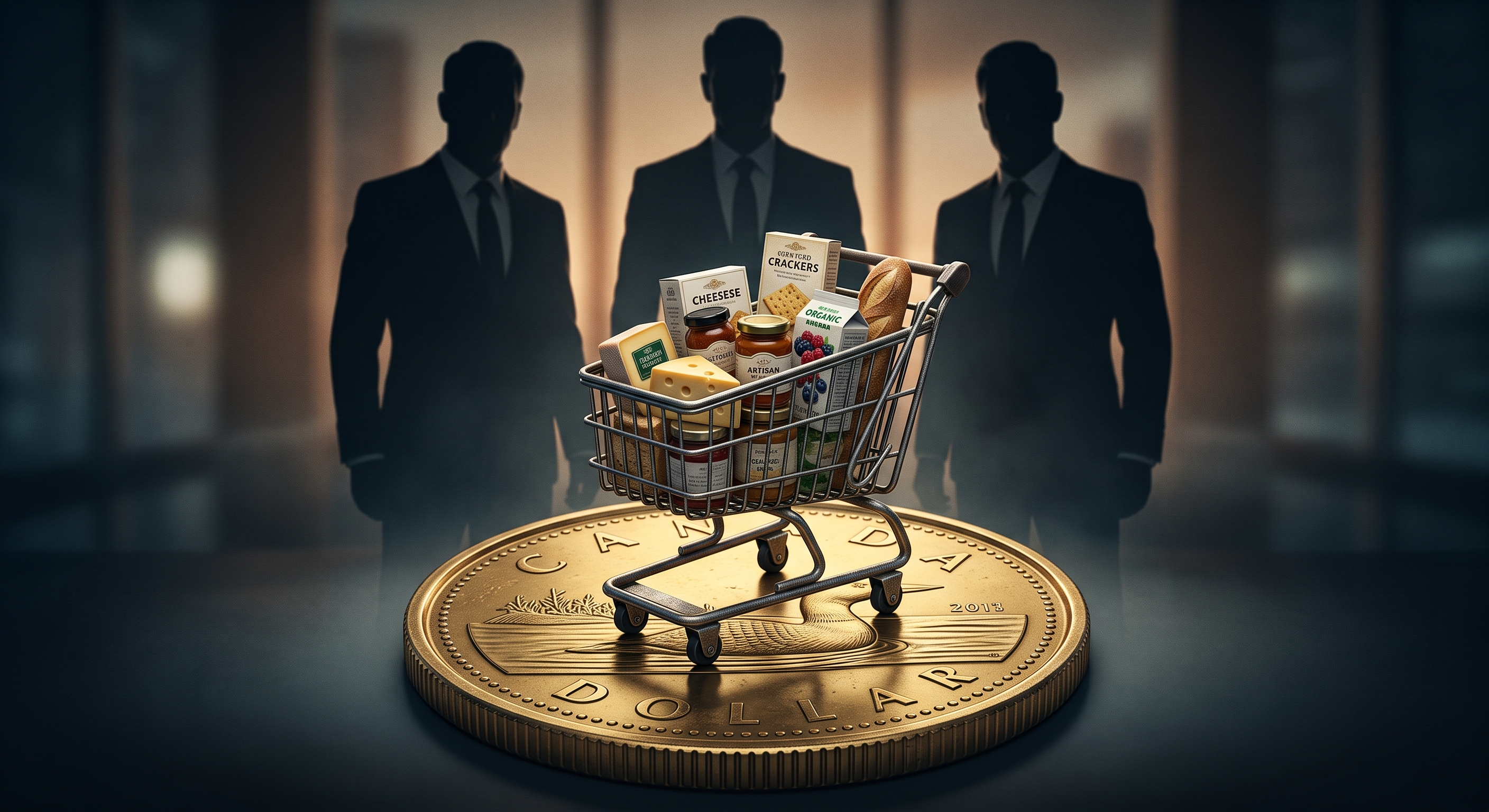
Picture this: you finish a long day of work, forget your reusable bags in the trunk of your car, (obviously), and stroll into your local grocery store. You’re not planning a royal banquet; you just need to grab the essentials. A bag of chips, a brick of cheddar, a carton of orange juice, and a couple of chicken breasts for the barbecue. You saunter up to the self-checkout, scan your items, and let out an audible gasp when you see the total - eighty-four dollars!
You blink, looking around for a hidden camera to indicate this is all a big joke. Did you accidentally purchase a timeshare in Muskoka? Did you unknowingly finance a Zamboni?
Nope, that’s just high food prices in Canada, and it’s the norm.
Welcome to the untamed, highly inflated cost of living in Canada, where the bag of chips is mostly a bag of air with a chip garnish, a pack of chicken is mysteriously smaller than it was last week, and somewhere in a fancy boardroom in Toronto, a retail shareholder is smiling to themselves about an absolutely lovely quarter while they plan their next Caribbean vacation. If your immediate reaction to buying a single bell pepper is to look at the receipt and shout, “Hey bud, since when does a vegetable require a financing plan?!”, you are far from alone.
But why are groceries so expensive in Canada? Have Canadians collectively forgotten how to budget? Spoiler alert: No. When full-time workers are lining up at food banks in record numbers, the problem isn’t that you’re buying too many lattes. The problem is structural, systemic, and beautifully camouflaged. Let’s break down Canadian grocery prices and food inflation in Canada to see why things are so out of control. We will dissect the sneaky trick known as “shrinkflation in Canada”, and figure out how you can fight back without having to forage for berries in your local park or take up fishing in the community pond.
The Magic of Shrinkflation in Canada
In the retail world, there are exactly two ways to raise the price of a product.
Option A is the honest, boring method: you simply charge more for it. The price tag goes from $4.99 to $5.99. People notice, people grumble, and occasionally, people leave the item on the shelf.
Option B is a masterclass in psychological warfare. You keep the price exactly the same, at $4.99. But you quietly, stealthily remove 40 grams of product from the packaging, cross your fingers, and pray that nobody in the aisle happens to be carrying a scale in their pocket.
Time and time again, the grocery industry has enthusiastically chosen the second road, and they have paved it with your dignity.
This tactic is called shrinkflation: the dark art of selling you less while charging you the exact same amount. Changing the sticker price makes people angry, and angry people are terrible for quarterly earnings. Instead, your brain registers the familiar $4.99 grocery store sticker price, your wallet registers the $4.99 cost, but your family is suddenly eating 12 percent less cereal, and absolutely nobody from the company mentioned it. Economists politely refer to this as “non-price inflation.” Everyday grocery shoppers call it, “Why is this bag so light? Is it empty? Am I being pranked for a TikTok video?”
You have undoubtedly experienced this phenomenon. The tub of ice cream that used to be a robust 2 litres is now 1.5 litres, but it's housed in a plastic container cunningly sculpted to look like it’s still 2 litres. The toilet paper that is boldly advertised as “Mega Double Rolls,” unspools with the tragic thinness of single ply. These are only a few examples of shrinkflation in Canada. We have all encountered it. The frozen pizza that was your easy family go-to on hockey night is now essentially a personal pan pizza, yet it is marketed with the sheer confidence of a corporation that assumes you simply don’t remember what food looked like in 2019, or last month for that matter.
Why Are Canadian Grocery Prices So High? (The Reality Check)
As frustrating as shrinkflation is, it is only half of the story. If you want to know why you need a second mortgage to buy a ribeye, you have to look at the unique, slightly ridiculous realities of groceries in the Great White North.
First and foremost, Canada has one of the most concentrated grocery markets in the developed world. A tiny handful of massive corporate chains control the overwhelming majority of food retail from coast to coast. When basically five companies get to sit in a room and decide the price of bread (and yes, we literally had a massive national scandal about them fixing the price of bread), you are no longer a customer. You are a rounding error. Lack of competition means a lack of options, and that means you pay what they tell you to pay.
But we can't blame everything on the grocery barons. There are other massive hurdles:
Location, location: Canadian grocery prices are partly a product of our geography. Canada is staggeringly enormous. Our population is spread incredibly thin. Therefore, getting a shipment of strawberries from a port in Halifax to a supermarket shelf in Moose Jaw involves trucking goods over a distance that would make a European logistics manager burst into tears. Transporting food costs a fortune in gas, insurance, and wages - and guess who pays for all of that at the checkout? (Hint: It’s you).
The Sad, Sagging Loonie: As Canadians, we love our brightly colored money, but let’s be honest, the Canadian dollar frequently trades like Canadian Tire money on the global market. A massive percentage of what we eat is priced in U.S. dollars long before it hits the shelves. When the loonie drops, your grocery bill rises.
Climate and Supply Shocks: A drought in California, extreme flooding in BC, or a terrible harvest in South America doesn't just stay local anymore. In our deeply intertwined global food web, bad weather in one agricultural region ripples through every single checkout aisle in Canada.
The Canadian Shrinkflation Hall of Fame (and Shame)
While some price increases are unavoidable, the sneaky packaging tricks are entirely by design. Some of these shrinkflation moves are so brazen they deserve a plaque in a museum of corporate audacity. Let’s review the heavy hitters:
The Cereal Box That Became a Cereal Suggestion: The box has the exact same height and the exact same width. The front looks identical on the shelf. But turn it to the side, and it is noticeably thinner. You pour out four bowls of frosted flakes, and suddenly, you're shaking an empty 2D cardboard box.
The "Family Size" That Feeds Nobody: You splurge on the "Family Size" bag of chips, assuming it will last the weekend. Yet once you open it and peer past the 70% nitrogen air-fill, you have to ask yourself: a family of what, exactly? Field mice?
The Juice Bottle with the Concave Bottom: This is an optical illusion engineered by a marketing villain. The bottle is the exact same size. The contents are not. That massive plastic curve pushing up into the base of the bottle is simply a price increase wearing a clever disguise.
The Chocolate Rectangle: It still costs the same as it always did, but it now weighs roughly what a granola bar weighed back in 2015. It’s no longer a chocolate bar; it’s a chocolate concept.
The truly remarkable part about all of this? None of it is illegal. When it comes to shrinkflation in Canada, you can shrink a product to the size of a postage stamp, as long as the label on the packaging is technically accurate. And trust us, the label is likely accurate - it’s just printed in a microscopic six-point grey font, on the back of the package, tucked under a flap, and angled away from the grocery store lighting.
The Canadian Grocery Code of Conduct (Aka: Asking Nicely)
If you follow Canadian politics, you might have heard whispers of the "Grocery Code of Conduct." This has been the subject of years of intense political negotiation.
What is the Grocery code of conduct in Canada? It’s essentially a voluntary set of rules meant to level the playing field between the massive grocery retailers and the suppliers who provide the food. The fact that it requires a multi-year federal task force to basically say, “Please don’t mercilessly squeeze the farmers and manufacturers who make our food,” tells you everything you need to know about power dynamics in Canadian retail. Unfortunately, because it is largely voluntary, it holds about as much weight as a polite Canadian suggestion, complete with a stereotypical apology that is not recognized as an admission of guilt in a court of law.
How to Save Money on Groceries in Canada: A Price Survival Guide
There is some good news, you don't have to take this lying down. Short of ripping up your front lawn to plant a potato farm or moving abroad to a country with a much shorter supply chain, there are actual ways to navigate this highly inflated landscape without completely losing your mind.
The unit price - not the sticker price. Look very closely at a shelf tag in your local Canadian grocery store. Beneath the giant, glowing price designed to catch your eye, there is a tiny number in the corner - usually dollars per 100 grams. That is the only honest figure in the entire store. It is the great equalizer, and it is the number the grocery store actively hopes you never find, but legally has to provide.
Compare products over time. Don't let the grocery store gaslight you into thinking that jar of mayo was always that small. Take a photo of the shelf. Repeat the process in a month. Shrinkflation becomes starkly visible when you stop trusting your memory and start trusting your camera roll.
Shop store brands, but only if it makes sense. We often pay a premium for a name brand (we are looking at you Heinz) . But here is a poorly kept secret: sometimes the "no-name" or store-brand product rolls off the exact same factory line as the national brand. You are occasionally paying a 30 percent markup purely for a font. It is important to note that a store brand is not always a better deal, this is where unit price comes into play. Pay attention to the tiny number in the corner.
Shop Strategically. High food prices in Canada create an environment where you need to plan your attack like an army general. If you stick to the outer edges of the store (fresh produce, meat, dairy), you dodge the worst of the shrinkflation traps. Why? Because fresh food doesn't have a deceptive concave bottom.
Support the Grocery Code of Conduct in Canada. Voluntary corporate codes have a long, almost laughable history of being completely ignored by the exact companies they target. If you are fed up with Canadian grocery prices, and want to help curb shrinkflation in Canada, ask your Member of Parliament where they stand on making these rules mandatory. Then, sit back and watch them furiously try to change the subject while you quietly evaluate your future voting choices.
The Uncomfortable Bottom Line of High Food Prices in Canada:
Since your head is probably spinning and your bank balance is likely stagnant, let's summarize the madness. Canadian grocery prices are not high because you forgot how to clip coupons or because you splurged on that cup of premium coffee last week. They are high because a small number of very large companies have realized they can charge you more, give you less, and face almost zero consequences. Our geography makes things more complicated and naturally expensive, but our lack of retail competition is what makes things absurd.
Let’s be honest, none of this is particularly funny when you are just trying to feed your family. Truthfully, the only comedy left is in the sheer audacity of the packaging - the bright, flashing "New Look, Same Great Taste!" banner hovering over a product that is objectively 15 percent smaller, or the loyalty program that rewards you with digital points you can only redeem on a Tuesday for a melon you don't want.
So, keep your stick on the ice. Eat as well as you can. Always read the unit price. And if you are forced to pay eighteen dollars for a single chicken, you had better marinate it well, roast it perfectly, and make it a chicken dinner worth remembering.
FAQ: Shrinkflation & Canadian Grocery Prices
What is shrinkflation in simple terms?
Shrinkflation is a pricing strategy where a company reduces how much product you get (the volume or weight) while keeping the retail price exactly the same. Your brain sees the same price tag, but you are ultimately getting less food.
Is shrinkflation illegal in Canada?
Sadly, No, it is not illegal. Reducing a package's size is perfectly legal under Canadian law as long as the net quantity printed on the box is accurate. The government regulates packaging for accuracy (ensuring you actually get the 300g they promised), not for fairness (stopping them from reducing the bag from 400g to 300g overnight) or font size.
Why are groceries more expensive in Canada than the U.S.?
It’s a perfect storm of logistics and economics. Canada has a smaller population spread over a massive landmass, making shipping incredibly expensive. Add in a highly concentrated grocery retail market (an oligopoly of just a few major corporate players) and a weaker Canadian currency that trades below the U.S. dollar, and you get screwed by higher shelf prices.
What is the Grocery Code of Conduct in Canada?
The Canadian Grocery Code of Conduct is a proposed set of guidelines governing how large, powerful grocery retailers interact with their smaller suppliers (like farmers and food manufacturers). A version of this code was recently agreed upon as a voluntary code, but critics argue that voluntary rules without strict legal enforcement lack the teeth required to actually change the industry.
Does buying store brands actually save money?
Yes, well, sometimes. Often buying a store brand version of a product can reduce the cost by a significant margin! You can sometimes save between 20 to 40 percent on your grocery bill by switching to private-label store brands. In many cases, these products are manufactured in the exact same commercial facilities as their more expensive, name-brand competitors, meaning you get the same quality without paying the company's marketing budget. However, it is important to pay attention to the unit price when comparing products, as some store brands can be more expensive than their name-brand counterparts when you factor in the volume of product. For example, a 150g bag of store-brand chips for $2 ($1.33/100g) vs. a 300g bag of name-brand for $3 ($1.00/100g In this case, the store brand is more expensive when you factor in the volume of product, even though the price per bag is cheaper.