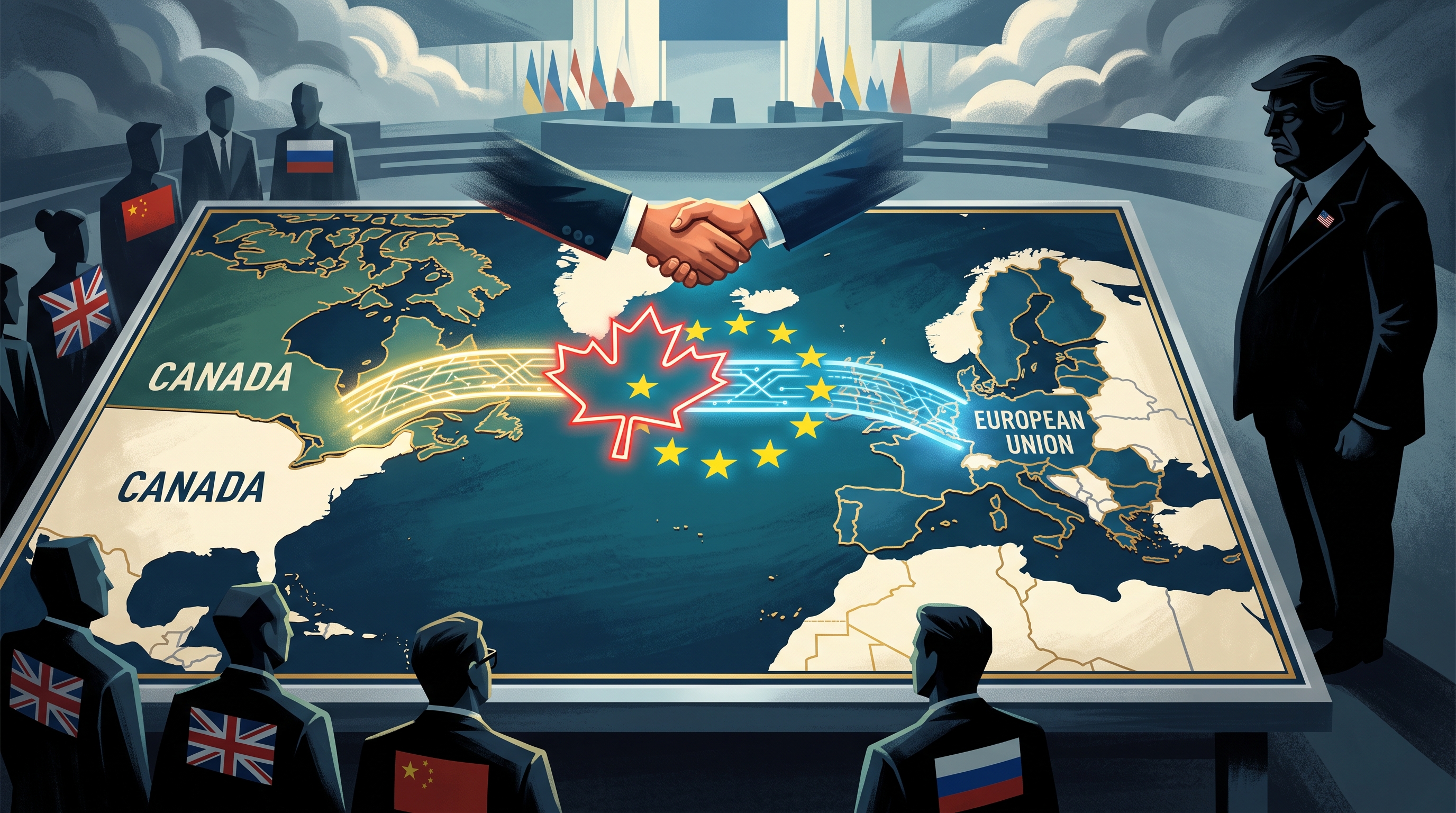
Picture this: you step off a red-eye flight in Paris, bypass the three-hour passport queue with a casual nod, flash a passport emblazoned with both a Maple Leaf and a ring of yellow stars, and pay for your espresso using Euros that carry a picture of a beaver on the back. Sounds like a fever dream born from consuming too much poutine right before bed, doesn't it? Yet on both sides of the pond, people are asking, Can Canada join the EU?
Let’s be honest: Canadians are used to weird geographical debates. We’ve spent decades arguing over whether the Northwest Passage belongs to us, whether Toronto is technically the center of the universe (by the way, it isn't, no matter what CP24 says), and whether Greenland is close enough that we should just invite them over to share a two-four around the bonfire. But lately, a political proposition has been floating around that sounds like it was dreamt up after one too many late-night sessions at a Tim Hortons drive-thru: Can Canada join the EU?
Yes, you read that correctly. The country of beaver tails, hockey rink arguments, and endless Construction Season is being seriously (or at least semi-seriously) discussed as a potential 28th member of the European Union.
If your immediate reaction is to look at a globe, point at the Atlantic Ocean, and shout, “Hey bud, there’s about 3,000 miles of deep blue water in the way!”, you’re not alone. Geographically, the idea is completely bonkers. But politically, economically, and diplomatically? It might just be the most fascinatingly practical piece of geopolitical madness of the decade.
1. Wait, Could Canada Legally join the EU? (The Geography Problem)
Let’s address the elephant in the room - or rather, the moose on the ice.
Geographically speaking, Canada is about as European as a double-header in Moose Jaw. Canada is separated from the European continent by the vast, chilly waters of the Atlantic Ocean. Furthermore, the prospect of Canada EU membership is complicated by Article 49 the Treaty on European Union, which explicitly states that any "European State" may apply for membership.
However, rules in international politics are a lot like traffic guidelines in downtown Montreal: subject to creative interpretation.
So, Can Canada Join the EU?
International law has a funny way of bending when everyone in the room suddenly decides they need each other.
Proponents of Canadian accession like to point out that Canada shares a land border with Europe - specifically on Hans Island, which Canada peacefully partitioned with the Kingdom of Denmark in 2022 after decades of the legendary "Whiskey War." Technically speaking, Canada touches the EU! Plus, culturally, institutionally, and ideologically, Canada shares far more values with Western Europe than it does with many other global regions. So perhaps a Canada-European Union geopolitical relationship is not so far-fetched after all.
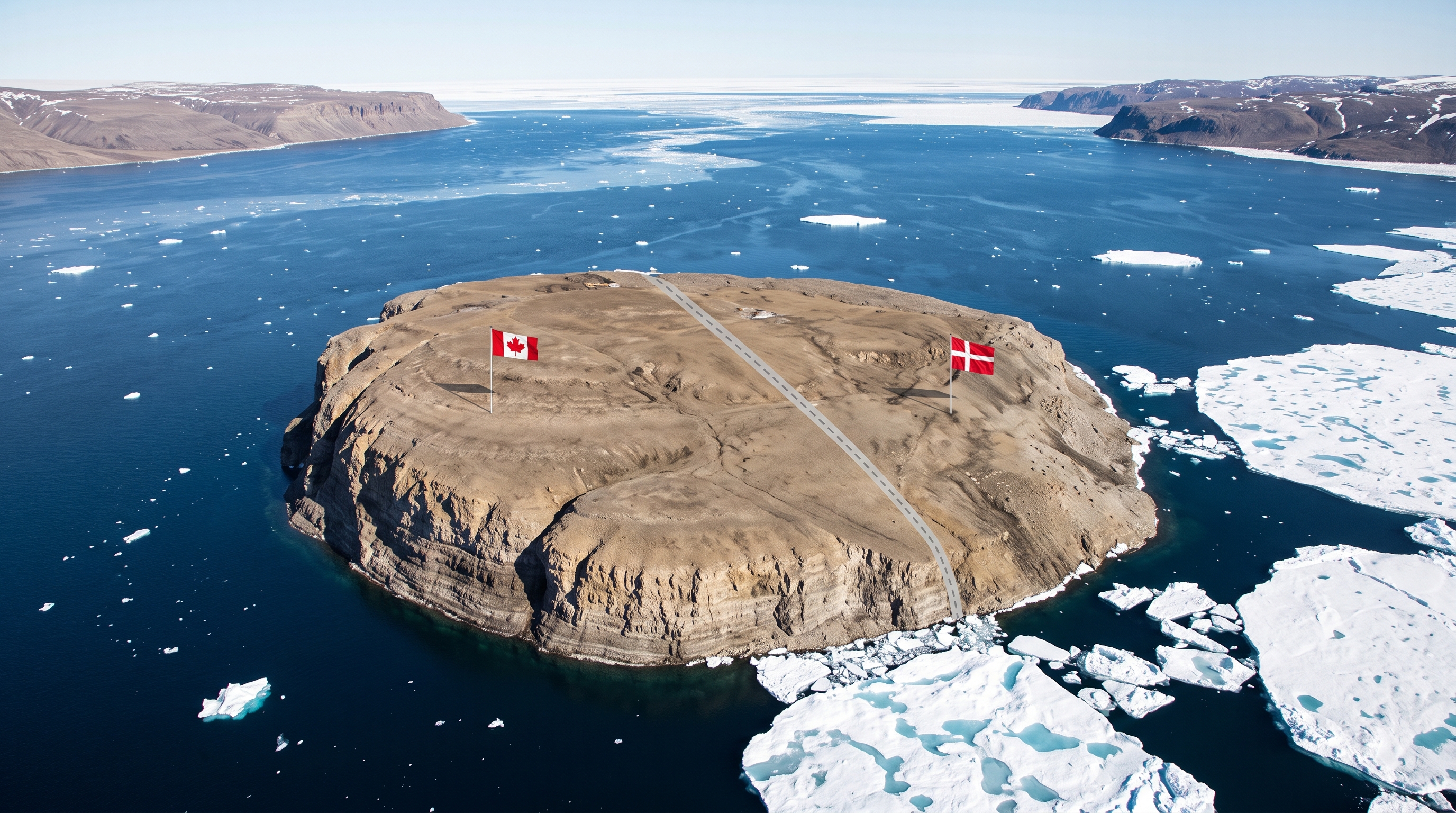
If Cyprus (geographically in Asia) and French Guiana (in South America) can be part of the EU ecosystem, why not Canada? After all, we’ve already got two official languages, one of which is French. We're practically halfway there!
Hang on to your double-double, it gets better.
Beyond border quirks, Canada and the EU already share CETA (the Comprehensive Economic and Trade Agreement), which basically eliminated 98% of tariffs between us. We are, culturally and institutionally, essentially European already: we love universal healthcare, we apologize when someone else bumps into us, and we spend vast amounts of energy complaining about our weather while pretending to enjoy winter sports.
2. Why Now? The American Shadow & Trump’s Boiling Point
So why is this idea suddenly moving from Reddit threads to serious policy panels? To find the answer you merely need to look south. The political climate in the United States has made Canadian strategic planners deeply uncomfortable. Between sweeping tariff threats, volatile trade rhetoric, and Washington’s increasingly isolationist posture, Ottawa has realized that putting 75% of our trade eggs in one star-spangled basket is a recipe for high blood pressure.
The View From Mar-a-Lago
If you want to test whether an idea in Canadian foreign policy has real teeth, just look at the reaction across the border. Donald Trump and his inner circle have reacted to the faint whisper of Canada–EU alignment with all the calm restraint of a toddler denied a cookie.
Why does the mere suggestion make Trump so angry?Simple: control. For over a century, the U.S. has operated on the comfortable assumption that Canada has nowhere else to go. Bound by geography, pipelines, supply chains, and shared culture, Canada has had few options in the past. The new idea of 'Canada Strong' strips America of its power and, in turn, the U.S. loses its ultimate bargaining chip.
Imagine the spectacle if the U.S. administration threatened a 25% tariff on Canadian steel, only for Ottawa to reply, “That’s fine, Donald, we’ll just ship it to Rotterdam tariff-free under EU Single Market rules.” It completely upends the economic power dynamic that has been present in North America for decades. It’s no wonder Washington commentators start sweating at the mere mention of it.
3. The Currency Question: Would We Have to Ditch the Loonie?
If Canada were to trade its status as North America’s quiet overachiever for a seat at the European table, the economic consequences would be monumental.
Before we start painting maple leaves on the European Parliament building in Strasbourg, let's take a look at what EU membership would actually look like for the average Canadian:
The Upsides: Freedom, Protection, & Tons of Trade
Freedom of Movement: Imagine being able to pack your bags and move to Spain, Ireland, or Sweden with zero visa headaches. For everyday Canadians, this is where things get exciting. A Canadian passport would instantly grant you the legal right to live, work, retire, or study anywhere from Barcelona to Berlin without needing a visa. Want to open a maple-infused bakery in Prague? Go right ahead. Want to telework from a beach in Greece? You've got it.
Strategic Security: Joining the EU’s collective security frameworks would give Canada an extra buffer of geopolitical stability at a time when global norms are looking distinctly shaky.
Market Power: Combined, the EU + Canada would form a market of nearly 500 million high-income consumers, giving us unprecedented leverage when negotiating with global giants like China or the U.S. Canadian businesses would enjoy completely tariff-free, frictionless trade across 27 (or 28) member states.
If Canada were to join the EU, it would effectively be a giant geopolitical pivot away from Washington's orbit. A Canada-EU membership would bring the European regulatory super-state directly onto the northern border of North Dakota.
Imagine American car manufacturers having to comply with European environmental standards just to sell trucks in Ontario, or US agricultural exporters getting blocked by European GMO bans at the Windsor-Detroit border!
For Trump, whose foreign policy has long centered on "America First" nationalism and a deep skepticism of transatlantic alliances, Canada joining forces with Western Europe looks like the ultimate diplomatic thumbing of the nose. It’s Canada declaring: "If you're going to threaten tariffs and push us around, we'll just go find 450 million new best friends in Europe."
The Downsides: Bureaucracy & Milk Wars
Agricultural Clash (The Supply Management War): Canadian dairy farmers are a political force of nature. Try telling a Quebec dairy farmer that cheap French Camembert is about to flood local supermarket shelves without tariffs, and you’d face a tractor blockade that would make Ottawa in February look like a fun family picnic.
Loss of Monetary Policy: If Canada adopted the Euro (which is not the only option), the Bank of Canada would no longer control our interest rates. Setting monetary policy for both Frankfurt and Fredericton at the same time sounds like a recipe for policy chaos.
Regulatory Overload: European bureaucracy is world-famous for a reason. Do Canadians really want to have Brussels dictate the permissible curvature of our bananas?
4. The Cultural Fit: Polite Technocracy Meets Arctic Resilience
On a cultural level, the match is surprisingly seamless. Canadians fit right in with the European political ethos. We value strong public services, public order, multi-party coalitions, and polite disagreement. While American politics often feels like a high-stakes gladiator match hosted by reality TV producers, European politics is a slow, methodical exercise in compromise—which is practically Canada's national sport.
Imagine Canadian politicians bringing our trademark manners to the floor of the European Parliament:
“Mr. President, with all due respect to my honorable colleague from Bavaria, I must politely point out that his proposal on Baltic timber regulations is, if I may be so bold, an absolute double-double of a mess. I apologize for my directness.”
And let’s not forget what Canada brings to the table for Europe. The EU is desperate for critical minerals, clean energy, liquified natural gas, and Arctic security presence. Canada has all four in abundance. We aren't coming to the party empty-handed; we’re bringing the appetizers, the fuel, and the snowblowers.
5. The Verdict: Pipe Dream or Power Team?
At the end of the day, is Canada actually going to become the 28th member state of the European Union anytime soon? Probably not.
Realistically, full membership is a massive longshot. The geographical definition in the EU treaties, the friction over supply management, and the sheer logistical nightmare of integration make formal ascension improbable. Such a move would not happen overnight; it would be a multi-decade mountain to climb.
However, the spirit of the idea is already happening. What we are witnessing is the birth of an "associate" relationship that pushes Canadian-European integration far beyond standard trade deals. As global powers realign and old alliances face strain, Canada is actively choosing to look across the ocean rather than solely down the highway.
The fact that the conversation is even happening says a great deal: Canadians are no longer content to sit quietly in the shadow of our southern neighbor, accepting whatever economic tantrums come out of Washington.
Whether through a specialized "Associate Membership," deeper bilateral integration, or just standardizing our cheese production, Canada’s future is undeniably leaning transatlantic. So, to our friends in Brussels: keep a seat warm for us. We might not abandon the Loonie or start driving on the left side of the road, but in a world that’s getting weirder and wilder by the day, a little more Canada in Europe - and a little more Europe in Canada - doesn’t sound half bad, eh?
While you should hang on to your loonies (for now anyway) and keep a bottle of maple syrup close by, in the wild world of 21st-century geopolitics, stranger things have certainly happened!